PHILCO J838-124 Radio Vacuum Tube Am Collectible
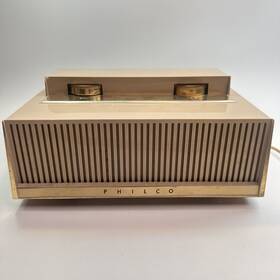
( Brand: Philco ), ( Manufacturer Part Number: J838-124 ), ( Part Type: Radio Vacuum Tube )
Review PHILCO Vintage Radio Vacuum Tube Am Unique Rare Collectible
The Philco J-838-124 radio is an impressive collectible piece that harksback to the golden age of radio broadcasting in the 1950s. This antique radio was manufactured by the Philco Corporation, a leading company in the electronics industry during that era. Measuring approximately 13 inches wide, 9 inches high, and 6 inches deep, this tabletop radio model boasts a vintage design that is sure to grab the attention of radio enthusiasts and decorators alike.
The Philco J-838-124 is encased in a classic wooden cabinet, giving it a warm and inviting appearance. The cabinet has been meticulously finished in a high-gloss lacquer, which lends the radio an appealing shine that enhances its aesthetic appeal. The cabinet's top features a sculpted design, reminiscent of mid-century modern furniture, while the angled legs at the bottom add an element of elegance and stability to the design.
The radio's control panel is home to a variety of dials and knobs that give users full control over their listening experience. Though the specific tuning and volume knobs are not detailed here, they were typical features of radios from this time period and would have had a classic rotary or dial design. The dial, located in the center of the control panel, displays both AM and FM frequencies, allowing listeners to enjoy a wide range of programming.
Less common in modern radios but highly desirable in vintage models, the Philco J-838-124 houses vacuum tubes for amplification. Six vacuum tubes, specifically, nestle inside this radio: one 12AX7, one 12BH7, two 6V6, one 5U4GB, and one 6L6vhc. These tubes play a crucial role in converting electrical signals into sound, thereby providing the listener with high-quality audio.
The radio's speakers have also been crafted with care. The original Philco J-838-124 features two 6-inch round speakers that provide powerful and clear sound quality, allowing listeners to fully immerse themselves in the radio broadcasts or music of the era.
The Philco J-838-124 comes with an AC power cord and on/off switch, allowing users to easily plug it in and power it on. Its status indicator light glows softly when the radio is on, adding a cozy ambiance to any room in which it resides.
This collectible Philco J-838-124 radio is not only a functional appliance but also a stunning piece of mid-century design. For both radio enthusiasts and decorators, this vintage model offers a unique blend of style, nostalgia, and excellent sound quality that is hard to find in modern electronics. It stands as a testament to the ingenuity and craftsmanship of a bygone era.
Pros and Cons of Buying a Philco J838-124 1950s Vacuum Tube Radio as a Collectible
The Philco J838-124 is a vintage vacuum tube radio model produced in the 1950s. For those interested in collecting antique electronics, purchasing this radio could be an intriguing endeavor. Weighing the pros and cons can help you make an informed decision.
Pros:1. Authentic Vintage Experience: The Philco J838-124 provides an authentic 1950s listening experience as it utilizes vacuum tubes, distinctive in design and sound compared to modern electronic amplifiers.
2. Historical Significance: Vacuum tube radios were the forebearers of modern audio devices. Owning a vintage model like the Philco J838-124 becomes a piece of history, often rousing nostalgic sentiments.
3. Functional: Despite its age, the Philco J838-124 still works as a radio, providing entertainment and potentially even transmitting AM broadcasts in some locations.
4. Rarity and Value: As the Philco J838-124 was produced only in the 1950s, it can be considered a rare find among vintage collectible radios. This rarity and its aging process can lead to an increase in value as interest in antique electronics grows.
5. Aesthetically Pleasing: The vintage design of the Philco J838-124 is aesthetically pleasing, making it a great conversation piece, especially among collectors.
Cons:1. Limited Functionality: While the Philco J838-124 can still function as a radio, it may not meet modern standards for sound quality, connectivity, or additional features like presets and digital displays.
2. Requires Expert Troubleshooting: If the radio malfunctions, it may prove challenging and costly to repair due to the necessity of vacuum tube replacement or specialized expertise in vintage electronics.
3. Bulky and Heavy: Compared to modern compact and sleek audio devices, vacuum tube radios like the Philco J838-124 are significantly larger and heavier, taking up more space and requiring more effort to move.
4. Energy Consumption: The Philco J838-124 consumes more power than modern electronic devices due to its vacuum tube components.
5. Fragility: Vacuum tubes and their associated components require careful handling as they are much more susceptible to damage than modern components, making the Philco J838-124 potentially more vulnerable during transportation or daily use.
Conclusion:When considering the purchase of a Philco J838-124 vacuum tube radio as a collectible, one must weigh the unique authenticity and historical significance against the limitations of the technology. For collectors specifically interested in vacuum tube radios and the nostalgia they evoke, this model presents an excellent addition, boasting significant value to vintage electronics enthusiasts. However, those seeking modern convenience, ease-of-use, or energy efficiency may find the limitations challenging. Ultimately, the decision to own a Philco J838-124 comes down to the individual collector's priorities.
Details:
Pre-owned condition. If this is the case, please reach out and I will work to resolve situation. But overall, a nice vintage radio. Does show some wear and could use a good cleaning.
part #: j838124 prices
- $81.15-$135.00
specifications vinhomtel:
- brand: Philco
- mpn: J838-124
- part type: Radio Vacuum Tube
seller vinhomtel:
- # reviews: 1296
- city: Waverly, Nebraska
- rating: 100.0%
offer vinhomtel:
- availability: In Stock
- best offers: True
- sold: 0
- options: Ship-to-home
- started: January 21, 2025
- quantity: 1
general vinhomtel:
- condition: Used
- Vintage Electronics > Vintage Audio Video > Vintage Radios
payments vinhomtel:
- other
- credit card: Discover
- wallet: Apple-pay
returns vinhomtel:
- paid by: Seller
- policy: Returns Accepted
- time: 30 Days
- method: Money back
shipping vinhomtel:
- type: Calculated
- transit: 4-10 Days
- class: Standard, Expedited
- service: USPS Ground Advantage, USPS Priority Mail
- cost: $8.55
- carrier: USPS
Philco J838-124 Is Similar To:
- 0687001 Philco Vintage Ford White Am Alarm Clock Radio Tested Works (38% similar) Please see our pictures for the actual item. Vintage Philco ford white am alarm clock radio. Very collectible. R756 tested works great. All transistor radio tells time, alarm clock, light-up dial, am. Love this radio. Love the vintage look sound of am clock radio...(January 21st, 2019)
- 1974 Model Philco Vintage Radio (37.7% similar) This is the 1974 stylized special edition version of Philco-ford baby grand cathedral radio,circa it still in very good working condition. Sound is clear as brand new radio speaker. All buttons are working on off, am -FM-AFC,tuning,tone volume. This looks fabulous nostalgic decorative accessory. ...(November 8th, 2017)
- 37-361a Philco Vintage Radio Tombstone Tabletop Vacuum Tube Works (48.6% similar) No radio signal was found. Vintage used condition. Volume appears to work with some static. Radio has had only one owner. Condition: there are no cracks or lamination in the wood. Please review the photos closely as they are a part of and include exact items included in sale. I played with it a bit ...(November 30th, 2018)
- 37-60 Philco Vintage Tombstone Cathedral Radio Cabinet (40.3% similar) Cabinet is solid with no major damage beyond chips and scratches. Vintage Philco radio cabinet only. Free shipping. Fair condition please review pictures carefully. Original finish and grill cloth...(March 19th, 2018)
- 37-61 Philco Cathedral Tube Radio Model Vintage (24.6% similar) Power cord is in good condition. Philco cathedral tube radio model vintage 1936 images to up for offer cabinet is in very condition just a few scratches and chips. Speaker cloth is in very good condition bright no holes. I powered up the radio with a Mauriac worked great picked stations but when ...(September 21st, 2018)
- 37-62 Philco Wood Tube Radio (33% similar) Cabinet is in good condition no cracks needs to be refinished. Up for offer vintage 1936 Philco wood radio model powers on picks stations but has a bad motor boat hum. Speakers has a large hole in it. Radio powers on picks up stations but has a bad motor boat hum...(December 31st, 2017)
- 37-650 Philco Gorgeous Vintage Cathedral (33% similar) Appears to be in great cosmetic condition. Due to its age, however, I'm hesitant plug it in and test. Gorgeous vintage Philco cathedral wood en tube radio model - made in the USA. This radio is untested...(December 18th, 2017)
- 40-135 Philco Vintage Tube Radio (39.3% similar) Vintage tube radio wood Philco model needs to be restored controls work and sound works as well screen is torn on the front of great for collectors...(December 1st, 2017)
- 41-100 Philco Vintage Battery Operated For Parts Or Repair (36.1% similar) Working condition unknown. Nice cabinet. Up for offer is this vintage Philco battery operated radio. Model selling for parts or repair...(August 24th, 2018)
- 42-321 Philco Vintage Tube Radio Model Wooden Untested (45% similar) Buyer pays return shipping. Vintage Philco tube radio model 40S wood en untested approx...(September 27th, 2018)
- 42-345 Philco Vintage Tube Radio Model For Parts Or Repair (43.6% similar) Up for offer vintage 1941 Philco wood tube radio model dial glass and graphics are in good condition. Cut off time for same day shipping is 12 noon pacific. For parts or repair only measurements 16 long 10 wide 12 high thanks looking. Missing push buttons. Cabinet is in good condition no cracks. ...(March 15th, 2018)