UNITED STATES SIGNAL CORPS BC-14A Radio Immaculate
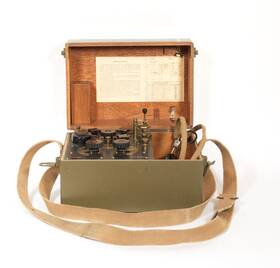
( Brand: United States Signal Corps ), ( Manufacturer Part Number: BC-14A ), ( Part Type: Radio ), ( Country Of Origin: United States )
Review UNITED STATES SIGNAL CORPS Usa Mint Working Radio Immaculate Original Condition
The United Signal Corps BC-14A 1918 Radio is a historic communication device, showcasing the technological advancements of the early 20th century. This immaculate piece of military history maintains its originality and pristine condition, making it a valuable collectible and educational tool for radio enthusiasts, historians, and collectors.
Measuring approximately 11 inches long, 7 inches wide, and 5 inches tall, this radio set is a compact yet powerful communication tool. Its wooden cabinet, adorned with intricate brass detailing, exudes an antique charm that transports you back in time. The dial, equipped with a clear glass window, displays the different radio frequencies, allowing the user to tune in to various stations with ease.
The BC-14A radio is a vintage broadcast and receiver set that utilizes a crystal set for reception. It comes with a hand-crank generator, which provides power for the set when no external power source is available. The set also includes a microphone and transmitter, making it a complete communication system. The transmitter operates on a vacuum tube, adding to the radio's impressive technical specifications.
The BC-14A 1918 Radio is in immaculate condition, with no signs of wear, damage, or restoration. Its original paint and finish remain intact, preserving the authenticity of the device. The components function as intended, and the radio produces clear, strong signals when in use. The set comes with its original carrying case, which protects the radio during transportation and storage.
In summary, the United Signal Corps BC-14A 1918 Radio is an exquisite and rare collector's item. Its historical significance, impeccable condition, and impressive functionality make it a valuable addition to any collection or display. This radio offers a glimpse into the past, showcasing the ingenuity and innovation of the early radio era.
The United Signal Corps BC-14A 1918 radio, an immaculate example of historical communication technology, comes with its unique set of advantages and disadvantages for potential buyers.
Advantages:1. Historical Significance: This radio is a piece of history, having been used during World War I. Collectors and history enthusiasts will find great value in owning such a unique and significant artifact.
2. Authenticity: The BC-14A 1918 radio is an original, not a replica. It provides an opportunity to connect with the past and understand the technology that shaped communication during a critical period in history.
3. Rare Find: Given its age and condition, the BC-14A 1918 radio is a rare find among collectors. Owning one sets the collector apart from others and adds to their prestige.
4. Educational Value: The radio serves as an excellent educational tool for students and educators, providing insights into the development of communication technology and its role in military history.
5. Potential for Restoration: While the radio is already in immaculate condition, some collectors might be interested in restoring it to working order for the sake of experience or to display its functionality at events.
Disadvantages:1. High Value: Given its rarity and historical significance, the BC-14A 1918 radio is a high-value item. The cost of acquisition might be prohibitive for some collectors.
2. Limited Functionality: As a historical artifact, the BC-14A 1918 radio may not have the same level of functionality as modern communication devices. Its use is limited to display or educational purposes.
3. Fragility: The radio's age and historical significance make it a delicate artifact. Proper care and handling are essential to ensure its preservation.
4. Limited Availability: Due to its rarity, the BC-14A 1918 radio may not always be available for purchase. When it is, competition among collectors can drive up the price.
5. Complexity: Understanding the operation and maintenance of the BC-14A 1918 radio requires a significant investment of time and resources. This may not be suitable for collectors who prefer simpler items.
Conclusion:The United Signal Corps BC-14A 1918 radio, in its immaculate condition, offers a unique combination of historical significance, rarity, and educational value. However, its high value, limited functionality, fragility, and complexity make it a niche collectible item suitable only for those with a genuine interest in historical communication technology and the resources to properly care for such an artifact.
Recommendation:For those with a deep passion for communication technology history and the financial and logistical means to acquire and care for an immaculate BC-14A 1918 radio, the investment is worthwhile. The opportunity to own a piece of history, engage in the educational value it provides, and connect with a community of like-minded collectors makes this radio an excellent addition to any collection. However, for those with more modest interests or resources, it may be wiser to consider more accessible and functional communication technology collectibles.
Details:
Clean coils, clean condenser, hardware, an undamaged hard rubber panel, knobs, and original detector assembly. And not only does the radio look like it was built last month, outworks month. Remember, this is an ancient crystal radio; it relies on all manner of relatively primitive technologies in order to tune stations. Original buzzer and cover are still present.
The radio will of course work with the headphones that are included. Condition is everything you'd want it to be and more. The original Western Electric 509W headset is still good and very sensitive, ideal for a crystal radio. Now almost 110 years old, the radio looks no different today than it did when left factory more a century ago.
Indeed, the radio is a marvel of preservation, appearing at first pass to be meticulous restoration an iconic WWI radio, but in fact has not been restored its completely original, right down immaculate woven carrying strap, olive green cabinet paint and crisp, clean instruction sheet affixed underside lid. Heres a BC-14-a wireless receiver manufactured for the USA Signal Corps in 1918. You are buying only the BC-14a radio. You don't just plug into a wall socket and start listening to Taylor Swift.
But if you're patient, and willing to experiment with a fidgety cat-whisker, cranky crystal numerous knobs levers, you can actually listen contemporary AM radio stations on the same game-changing receiver that American soldiers used in WWI glean information from Allied pilots alerting them location of enemy artillery positions battlefield below. When connected to a long wire outdoor antenna and good ground, it will tune strong local stations selectively with remarkable clarity.
specifications vinhomtel:
- brand: United States Signal Corps
- mpn: Bc-14a
- part type: Radio
- country of origin: United States
offer vinhomtel:
- availability: In Stock
- options: Ship-to-home
- sold: 0
- quantity: 1
- started: December 30, 2025
payments vinhomtel:
- wallet: Apple-pay
- credit card: Mastercard
- other
returns vinhomtel:
- policy: Returns Accepted
- time: 30 Days
- paid by: Seller
- method: Money back
seller vinhomtel:
- # reviews: 5189
- rating: 100.0%
- city: Chapel Hill, North Carolina
general vinhomtel:
- Vintage Electronics > Vintage Audio Video > Vintage Radios
shipping vinhomtel:
- transit: 4-9 Days
- cost: $45.00
- service: FedEx Ground / FedEx Home Delivery
- type: Fixed
- class: Standard
- carrier: FedEx
United States Signal Corps BC-14A Is Similar To:
- 595p United American Bosch Corporation Tube Radio Chassis (40.3% similar) What you see is get including all tubes in the pictures. No power up has been attempted. Vintage bosch corporation tube radio receiver model - serial number this is a buyer restoration project or parts unit. If you are restoring vintage radios, should know what to do...(September 2nd, 2018)
- 636c Bendix Of United States Vintage Bc Radio In Wood Cabinet (43.2% similar) Heavy - will weigh about 12 pounds when packaged for shipping. Has a nice looking wood cabinet...(March 27th, 2018)
- D720 Zenith Vintage Fm Tube Table Radio Model Made In United (29.9% similar) Does not work. Please see all pictures. Buyer pays chassis 6D01. Did not take it apart but theres a label on the bottom that shows following tubes: 50C5, 19T8 12BA6 x 3/1 2AT7. Vintage zenith FM tube table radio, model D720 only no am...(April 24th, 2018)
- Delco R-1141 Vintage United Motors Detroit Tube Table Wood Radio Parts repair (32.9% similar) Vintage United motors Detroit Delco R-1141 tube table wood radio parts/repair, broken parts: many imperfections: did not plug in: see photos: for parts...(September 30th, 2024)